Budget Travel to Portugal: Your Ultimate Travel Guide
Published: 19 Mar 2026
Budget Travel to Portugal, Portugal has quietly emerged as one of Europe’s hottest travel destinations — and for good reason. Deserts ablaze with sun-kissed Atlantic beaches and medieval hilltop castles; incomparable wine regions and works of art in every nook along its way, this small Iberian country delivers an extraordinary amount of experience for just seven letters. Most of all, Portugal is still surprisingly cheap compared to its Western European neighbours. There’s nothing like a great trip, but there’s no reason to spend all your money.
This guide will show you everything you need to know about budget travel in Portugal — including where to sleep cheaply and how to eat for next to nothing, free attractions, budget transport, and the lesser-known arrival with more bang for your buck.

Table of Contents
Understanding Daily Costs in Portugal
It helps to have an idea of daily spending when planning your trip. It’s much cheaper than places like France, Germany, and the UK, but there’s been a huge uptick in prices more recently in Lisbon and Porto because of tourist traffic.
To make it simple, if you’re a budget traveller and inquire about hostels/homestays and eat in small restaurants, then you can get along with €50–€70 per day. A mid-range traveller who shares a double room at a guesthouse and eats out relatively often can expect to pay €100–€130. If you prepare some of your meals, rely on public transport, and enjoy free attractions, costs as low as €40–€50 a day are easily achievable outside the major cities.

Reasonable Places Where You Can Stay Throughout Portugal
Accommodation is often the largest single travel cost, but Portugal has good options at every level. Hostels in Lisbon and Porto generally cost €18–€30 for a dorm bed, and many of them are nicely designed with rooftop terraces and social vibes. Budget guesthouses and pensões (ones run by families that double as B&Bs) are also a great choice, often with private rooms for €50–€80 per night — much cheaper than equivalent hotels.
For better value for money, don’t just look at Lisbon and Porto. Towns like Évora, Coimbra, Aveiro, and Viana do Castelo provide charming stays for a fraction of the capital’s prices. Camping is big along the Algarve coast, and well-equipped campsites can cost as little as €10–€15 a night.
And booking ahead — particularly for summer travel — saves money and ensures better options. Platforms like Hostelworld, Booking. com and even direct guesthouse sites often have the best prices. When you can be flexible, visiting in the shoulder seasons of spring (April–May) or autumn (September–October) translates to lower prices and fewer crowds.
Getting Around Portugal Without Overspending
Transport: Portugal has an affordable public transport network that serves at least some part of the country, although it is slower in rural areas. Once in the cities, metro systems like those in Lisbon and Porto are efficient and inexpensive — a single ticket is about €1.50, while a day pass costs approximately €6.60. Trams and buses stretch the network even further, and in Lisbon, you won’t want to miss riding historic Tram 28, which acts as a sightseeing tour all on its own.
For inter-city travel, Rede Expressos coaches are the budget traveller’s best friend. The network more or less reaches every city and town in Portugal at very low fares — it’s about €18–€20 to travel from Lisbon to Porto by bus, versus €30+ for the train. However, CP (Comboios de Portugal) trains are comfy and advance-purchase discounts can drop the fare Lisbon–Porto to €20–€25.
A rented car gives access to the rural Alentejo, the Douro Valley, and less-visited regions of the Algarve, but consider tolls on Portuguese motorways (A roads), which can add up fast. On short city trips, ride-sharing apps and taxis are relatively cheap by northern European standards.
Eating Well on a Budget Here in Portugal
Portuguese fare is hearty, tasty, and easy on the wallet if you eat where the locals do. The prato do dia (dish of the day) is your best friend — usually a full meal with soup, main course, bread, and drink for €8–€12. Pastelarias (bakeries) and cafés offer pastries, toasties, and coffee for such low prices that you’ll want to linger all morning. A galão (latte) is about €1–€1.50, and the famous pastel de nata custard tart typically costs less than €1.50.
Don’t eat in restaurants right next to major tourist sights — these always charge double for half the quality. Head a street or two away, and you’ll find curries at authentic tascas (traditional taverns) serving proper Portuguese cooking. During the day, bountiful food markets (or mercados) such as Mercado do Bolhão in Porto or Time Out Market in Lisbon, are good for sampling local food at reasonable prices — although the latter has gotten a bit touristy. Supermarkets like Pingo Doce and Continente are great for self-catering, with decent local wine available from €3–€5 a bottle.

Cheap and Free Things to Do in Portugal
The best of Portugal comes free of charge. In Lisbon: Wandering the Alfama district’s twisting cobbled alleyways; climbing to the miradouros (viewpoints) at Graça and São Pedro de Alcântara; and exploring the LX Factory street art scene are all free. The beaches of Costa da Caparica are a few short bus and ferry rides from central Lisbon, but miles of Atlantic coastline will cost you next to nothing.
Several of Portugal’s national museums grant free access on Sunday mornings, including the Museu Nacional do Azulejo and the National Museum of Ancient Art in Lisbon. You’d pay €10 to enter the Jerónimos Monastery in Belém, but you can admire the façade and stroll through its gardens for free. In Porto, the view from the Dom Luís I Bridge is free, while the beautiful São Bento station — a riot of blue-and-white azulejo tiles covering its floor to ceiling — is free to walk into and ooh and aah at.
For nature lovers, Portugal’s parks and coastlines are virtually all free. The craggy cliffs of Cabo de São Vicente — Europe’s most south-westerly point — are free to enter. Hiking in Peneda-Gerês National Park, in the north, is free; it has well-marked trails through ancient forests, granite peaks, and traditional villages.

Travelling Beyond the Big Cities
Lisbon and Porto are both undeniably lovely, but going beyond them will stretch your budget much further. In a way, the Alentejo region — Portugal’s sun-baked heartland — is an epiphany for budget travelers. Medieval walled towns, such as Évora, Monsaraz, and Marvão, have authentic experiences, inexpensive accommodations, and great local food and wine. The best way to explore the region is by car, although day trips from Lisbon are available.
Further inland in central Portugal, Coimbra is a bustling university city known for its stunning old library and the energetic student-based café culture that helps keep prices down. In the far north, the Minho region around Viana do Castelo is green and quiet — if missed by international tourists — making accommodation and food costs quite affordable.
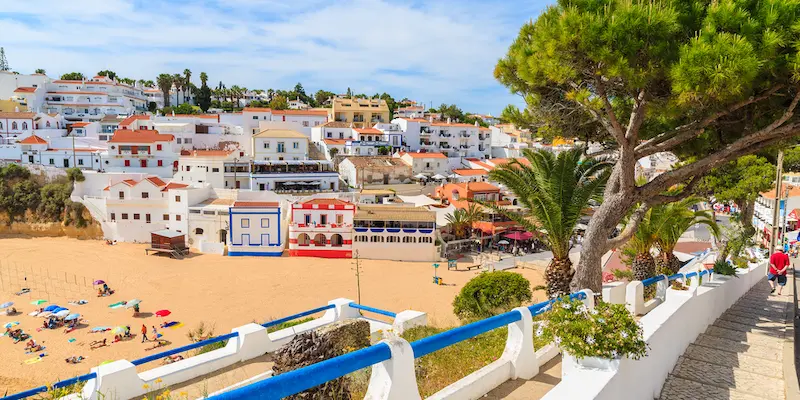
The eastern section of the Algarve — called the Sotavento — is far quieter and cheaper than the resort-laden western coast. Places such as Tavira, Olhão, and Castro Marim have beautiful lagoon views, terrific seafood, and a fraction of the tourist prices of places like Lagos or Albufeira. These regions reward the kind of slower, immersive travel that few people want to do in shoulder season — and they are a budget traveller’s dream.
FAQs: Budget Travel in Portugal
1. When is the cheapest time to go to Portugal?
A: The low months are November through March, except for the Christmas and New Year period. Spring (April–May) and autumn (September–October) hit the sweet spot of good weather, lower prices, and fewer crowds.
2. Which is cheaper, Portugal or Spain, for travelling?
A: Generally, yes. Portugal is 10–20% cheaper than similar destinations in Spain; this cost advantage keeps rising, especially outside Lisbon. These are all very affordable by European standards, along with accommodation, dining, and public transport.
3. How much does a week in Portugal cost — for pound pinchers?
A: A budget traveller staying in hostels, eating at local restaurants, and using public transport could spend around €350–€490 a week, not including flights. Expenses decrease even more if you make some of your own meals and travel off-season.
4. Is the Algarve cheap for backpackers?
A: The western Algarve (Lagos, Albufeira) is more expensive and touristy. For better value, turn east along the Algarve — towns such as Tavira and Olhão have stunning scenery, superb seafood, and prices that are far less inflated.
5. The most affordable way to travel between Lisbon and Porto?
A: The Rede Expressos bus is the least expensive option, at about €18–€20 one way. If booked in advance, journeys on the rail can be similar in price (and definitely more scenic and comfortable).
6. Is it common to accept credit cards in Portugal?
Q: Can I use a credit or debit card in Lebanon? In smaller cities and rural areas, it’s a good idea to keep some cash on hand. (There are multibanco ATMs everywhere, and they generally charge a small fee to withdraw.)
7. Do I need travel insurance to visit Portugal?
A: Travel insurance is highly advisable for all visitors, despite not being a legal requirement for EU citizens travelling with an EHIC/GHIC card. It includes coverage for medical emergencies, trip cancellations, lost luggage, and other unexpected expenses that can blow a budget trip out of the water.
Final Thought
Unless you are the most budget-conscious traveller, and even with such a focus, few places in Western Europe will reward you like Portugal. Affordable food, cheap wine, free beaches, and a plethora of no-pay cultural events mean your money just goes further here. Whether you’re nursing a €1 espresso in a sun-drenched Lisbon square or walking clifftop paths above the Atlantic, Portugal serves up great value at every turn. Plan wisely; take the road less traveled and you’ll come home loaded with more memories than you ever thought possible.