Best Place to Buy a House in Portugal in 2026 | Complete Guide
Published: 29 Mar 2026
Thinking about buying property in Portugal this year? You’re not alone. Thousands of buyers from the UK, the US, and across Northern Europe are making the same move — and for good reason. Portugal still offers something that’s genuinely hard to find in Europe right now: a beautiful country where the quality of life and the price of property actually make sense together.
The market has settled into a calmer rhythm after the frenzy of 2021–2024. Prices are still rising, but at a measured pace rather than the double-digit surges that made headlines a few years ago. And with visa options like the D7 Passive Income Visa and the new IFICI tax regime (which replaced the old NHR programme in 2024) still firmly on the table, the country remains as attractive to international buyers as it’s ever been.
But here’s the thing — Portugal isn’t one market. It’s seven or eight quite different ones, each with its own price points, lifestyle, and type of buyer. Getting this choice right matters. This guide walks you through every major region so you can find the right place to buy a house in Portugal for your specific situation.
Table of Contents
Why 2026 Is a Sensible Time to Buy in Portugal
After years of eye-watering growth, Portugal’s property market has found its footing. Residential prices rose by around 4–6% in 2025 — solid, sustainable growth rather than the speculative heat of previous years. Demand from overseas buyers remains strong, and rental yields in the key markets haven’t compressed the way many predicted.
The Golden Visa programme — restructured in 2023 to exclude residential purchases in high-density cities — still offers a residency route for buyers investing in low-density regions or approved investment funds. The Alentejo, for instance, still qualifies. And for those simply wanting to live here, the D7 Visa continues to offer one of the most accessible pathways to legal residency in Western Europe.
In short: the panic-buying window has closed, but the underlying case for buying property in Portugal is as strong as it’s been in a decade.
The Best Areas to Buy a House in Portugal in 2026
1. The Algarve — Still the Most Popular Place to Buy Property in Portugal
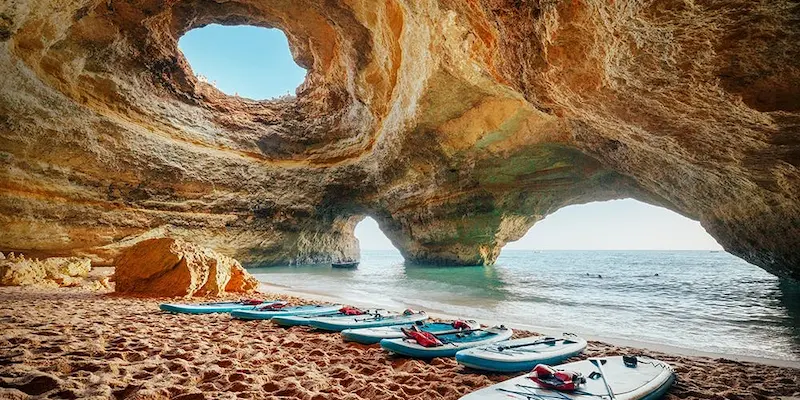
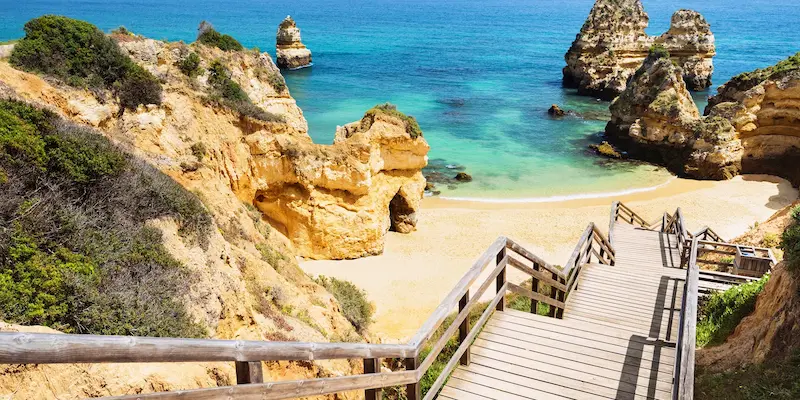
If you ask almost any overseas buyer where they want to live in Portugal, the Algarve comes up first. It’s been that way for decades, and nothing in 2026 is changing it. More than 300 days of sunshine a year, 155 kilometres of some of Europe’s finest beaches, and a lifestyle that’s genuinely relaxed without feeling cut off — the Algarve delivers on its reputation.
Prices vary enormously depending on where you look. In the Golden Triangle — the stretch between Quinta do Lago, Vale do Lobo, and Almancil — luxury villas regularly exceed €7,000–€10,000 per square metre. Head west towards Portimão and Lagos, and you’re looking at €3,000–€4,500/m². Go inland to places like Silves or Monchique and there’s still genuine value below €2,000/m².
Holiday rental yields here remain impressive. Well-run short-term rental properties in prime Algarve locations typically generate gross yields of 7–10% annually, and the season has stretched considerably — autumn and spring visitors have become a reliable income stream for owners who used to rely entirely on the summer rush.
Best for: Beach lovers, golf enthusiasts, retirees, investors targeting holiday rental income.
2. Lisbon — A City That’s Hard to Leave
Lisbon is the kind of city that gets under your skin. The tiled facades of Alfama, the viewpoints over the Tagus, the neighbourhood restaurants that haven’t changed in thirty years — there’s a warmth to it that larger European capitals rarely manage. And beneath that charm is a genuinely modern, commercially dynamic city that’s become one of Southern Europe’s more compelling investment markets.
Central neighbourhoods — Príncipe Real, Chiado, Lapa — sit at €6,000–€8,500/m² for quality apartments. Move to the outer parishes like Belém or Benfica and you’re looking at €4,000–€5,500/m². Long-term rental yields across most of the city run at 4–5.5%, supported by strong local and international demand.
Lisbon’s tech sector has brought a wave of younger, high-earning residents to the city, keeping vacancy rates low and prices stable even as the broader market has cooled from its 2023 peak.
Best for: Investors, professionals, families relocating internationally, city-lifestyle buyers.

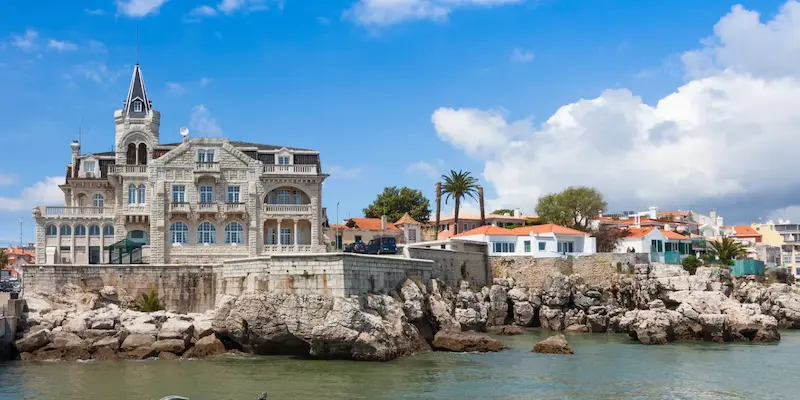
3. Cascais and Estoril — Coastal Living with the City on Your Doorstep
Cascais was once a summer retreat for the Portuguese royal family. These days it attracts a different kind of buyer — international, affluent, and looking for the full package: sea views, marina access, excellent schools, good restaurants, and a 40-minute train ride to central Lisbon when they need it.
It’s one of the most practical luxury markets in Portugal. Four- and five-bedroom villas with pools and Atlantic views typically range from €5,500 to €9,000/m² in prime positions. Estoril next door offers very similar access at a slight discount for buyers who are less concerned with the marina address.
Best for: High-net-worth buyers, families needing international school access, lifestyle-first purchasers.
4. Madeira — the Island That’s Finally Getting the Attention It Deserves
Madeira has shaken off its image as a destination for older retirees and cruise ship stopovers. The island’s consistent 22°C summers and 17°C winters, its dramatic volcanic scenery, and a fast-growing community of remote workers have transformed it into one of the more interesting places to buy a house in Portugal right now.
Property here is still meaningfully cheaper than the mainland. Quality apartments and villas in and around Funchal typically range from €2,200 to €3,800/m². Infrastructure investment has been steady — road links, the expanded marina, improved airport capacity — and the island qualifies for the IFICI tax regime, which matters enormously for buyers relocating from higher-tax countries.
Best for: Remote workers, retirees, buyers who want island life without the isolation of somewhere truly remote.
5. Alentejo — Space, Quiet, and the Best Value in the Country
The Alentejo is where you go when you’ve stopped trying to impress anyone and just want to live well. Cork oak forests, whitewashed villages perched on hilltops, some of the darkest and quietest skies in Europe — it’s the Portugal that most tourists never see, and that’s precisely the point for many buyers.
Property prices across the interior Alentejo remain the lowest of any major region — typically €900–€2,200/m² for rural homes, quintas, and country estates with significant land. The coastal strip is a different story: Comporta has become genuinely fashionable, with prices creeping above €5,000/m² in the most sought-after spots. For buyers who want that coastal proximity without Comporta prices, Alcácer do Sal and Grândola are worth serious attention.
One practical note: much of the Alentejo falls within Portugal’s low-density zone classifications, meaning Golden Visa-qualifying residential investments are still possible here.
Best for: Buyers seeking rural retreats, large plots, genuine privacy, or Golden Visa-eligible purchases.

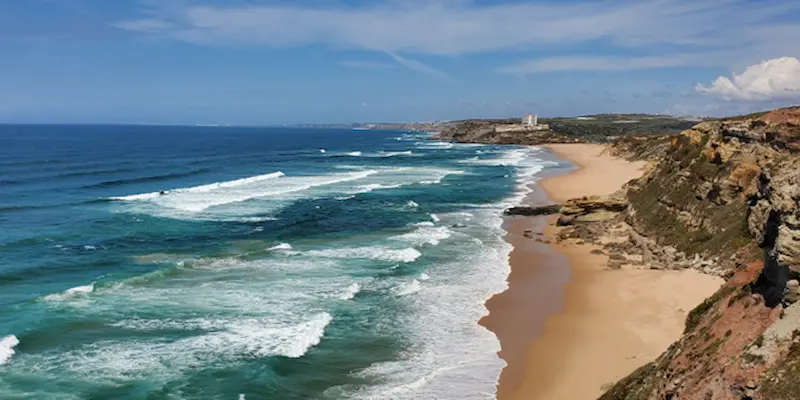
6. The Silver Coast — Portugal’s Most Underrated Stretch of Coastline
The Costa de Prata doesn’t get the press the Algarve does, and frankly that’s kept prices honest. Running north from the Lisbon region towards Coimbra — taking in Peniche, Óbidos, Nazaré, and Caldas da Rainha — it offers dramatic Atlantic scenery, serious surf, and an authentically Portuguese way of life that’s harder to find in the more heavily touristed south.
Prices along the Silver Coast average €2,000–€3,200/m², with detached villas with pools available from roughly €350,000–€450,000. That’s exceptional value given that you’re 45–75 minutes from Lisbon’s international airport and surrounded by one of the most beautiful stretches of coastline in the country.
Best for: Surfers, nature lovers, buyers who want Atlantic coastline without the crowds or the Algarve price premium.

7.Porto — No Longer the Underdog
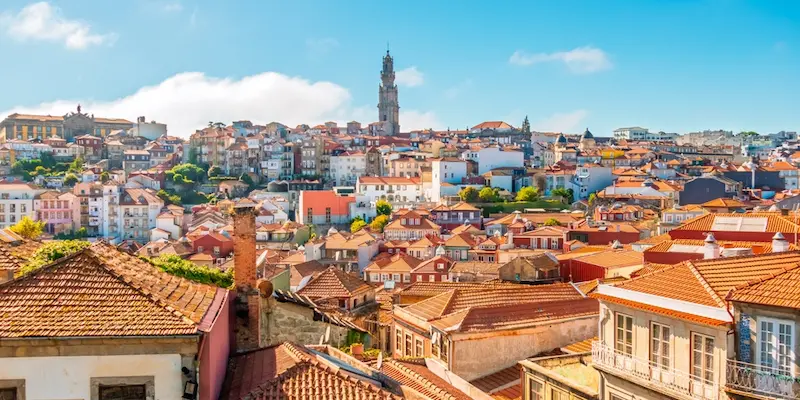
Porto has arrived. It used to be pitched as the cheaper, quieter alternative to Lisbon. Today it stands entirely on its own terms — a UNESCO World Heritage city centre, a food and wine culture that draws visitors from across Europe, a tech and creative economy that’s growing fast, and a resident population that’s genuinely proud of where they live.
Prime addresses in Foz do Douro and Bonfim sit at €4,000–€6,000/m². Emerging neighbourhoods like Campanhã offer good apartments at €2,500–€3,500/m² for buyers who are comfortable getting in slightly ahead of the curve. Rental yields are competitive at 4.5–6%, and short-term rental demand in the historic centre is consistently strong year-round.
Best for: Investors, younger buyers, anyone drawn to northern Portugal’s distinct culture and cooler Atlantic climate.
How to Buy a House in Portugal as an Overseas Buyer in 2026
The good news is that buying property in Portugal as a foreign national is straightforward, and there are no restrictions on ownership regardless of where you’re from — UK citizens included.
The process works in three stages. First, you’ll need a Portuguese NIF (tax identification number), which can be obtained before you even arrive in the country. Next comes the Promissory Contract (CPCV), signed with a deposit — usually 10% — which locks the property. Finally, the transaction completes through the Final Deed (Escritura) signed in front of a notary.
Expect to budget an additional 6–9% on top of the purchase price for buying costs: IMT property transfer tax (0–8% depending on the property value), stamp duty at 0.8%, notary fees, and legal fees.
One thing that genuinely makes a difference: hire an independent bilingual property lawyer before you sign anything. Not the agent’s recommended lawyer — your own. They’ll check the title, review the contracts, and flag anything unusual, which matters especially in rural areas where paperwork can be less clean-cut.
If you’re buying from the UK, keep a close eye on sterling-euro rates. The difference between a good and a bad rate on a €500,000 purchase can easily run to several thousand pounds.
FAQs — The Best Places to Buy a House In Portugal
Where is the best place to buy a house in Portugal for UK buyers?
The Algarve is the busiest. It consistently attracts buyers looking for beaches, golf holidays, sunshine, and plenty of rental demand. Lisbon, Cascais, and Porto are also great, depending on your lifestyle.
Are UK citizens able to purchase a property in Portugal following Brexit?
Yes. Just like EU citizens, there are no restrictions for nationals from the UK to buy real estate in Portugal. A Portuguese NIF number for you,u and if possible, a trusted local lawyer while you go through the process.
Where is the cheapest place to buy a house in Portugal?
The Alentejo, Costa de Prata, and inland areas such as Grandola and Alcacer do Sal have the cheapest properties — often with huge plots and a pool, at a fraction of the price paid on the coast.
Should you buy property in Cascais, Portugal?
Absolutely. Cascais boasts sea views, a lovely marina, excellent amenities,s and a direct rail link to Lisbon. It works equally well for luxury lifestyle buyers and investors.
Is a lawyer necessary for buying property in Portugal?
Although you do not have to appoint one, it is highly advisable for any overseas buyers to enlist an independent property lawyer fluent in Portuguese. They do title searches, they review the contracts, and they work to protect your interests throughout the process.
Is Portugal a good market for property investment?
Yes. Portugal has enjoyed steady property price increases, strong rental demand in both the Algarve and Lisbon, as well as a homely political climate — ranking it among Europe’s most reliable investment markets.
Which taxes are to be paid when purchasing a property in Portugal?
The principal taxes comprise IMT (property transfer tax, 0 percent–8 percent according to value), stamp duty at 0.8 percent, and annual IMI property tax. The total cost of the purchase, including fees, is usually 6–9% of the purchase price.
Final Thought
Portugal remains one of those rare places where buying property still feels like a genuinely sound decision rather than a speculative gamble. It’s also consistently rated among the best family places to stay in Europe — safe streets, good schools, accessible healthcare, and a pace of life that actually lets you breathe.
Whether you’re looking for the best place to buy a house in Portugal as a forever home, a retirement base, or a rental investment, the fundamentals are firmly in your favour in 2026. Take your time, get the right legal advice, and Portugal has a habit of exceeding expectations.